Daddy Police: A Designer’s Review for Business Merch
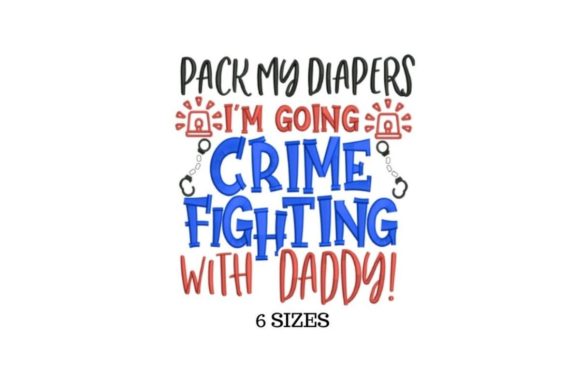
As an embroidery designer who has spent years digitizing logos and testing files for small business clients, I approach every new machine embroidery design with a critical eye. It is not just about whether the artwork looks cute on a screen; it is about how it performs on fabric, how it holds up in the wash, and most importantly, how it serves the brand identity of the business using it. Today, I am reviewing Daddy Police, a design that markets itself as a cheerful addition to baby clothes for fathers in law enforcement. While the initial description targets the consumer gift market, I want to evaluate its potential for small business merchandise, branded patches, and custom apparel lines.
First Impressions: Visual Personality and Tone
The title Daddy Police immediately suggests a playful, affectionate tone. It bridges the gap between professional authority and domestic warmth. For a boutique owner or an Etsy seller specializing in handmade products, this duality is gold. The design does not aim for the rigid, sterile look of an official department badge. Instead, it offers a "cheerful touch," as noted in the product description. This makes it feel friendly, approachable, and distinctly handmade.
From a design perspective, this implies that the lines are likely softer and the composition more illustrative than technical. For businesses looking to create custom apparel that feels personal rather than corporate, this aesthetic is ideal. It avoids the stiffness of traditional uniform embroidery, allowing it to cross over into lifestyle merchandise. However, because it leans into humor and sentiment, it must be executed with precision to avoid looking amateurish. The balance between "funny quote" and professional finish is where the value lies.
Real-World Applications for Small Business Merch
While the primary description mentions baby clothes, limiting Daddy Police to infant wear ignores its broader commercial potential. Here is how I see this design performing in various small business contexts:
- Embroidered Patches: This is perhaps the strongest use case. A well-digitized version of this design can be turned into an iron-on or velcro-backed patch. Local police departments often have family days or charity events where such patches serve as memorable keepsakes. For a craft business, selling these as standalone design assets or finished patches can diversify revenue streams.
- Cap Embroidery: Dad hats and baseball caps are staples of modern merchandising. Placing this design on the front panel of a cap creates a subtle yet proud statement. It works well for off-duty officers who want to acknowledge their profession without wearing a full uniform. The curved surface of a cap requires careful digitizing to ensure the text remains legible and the shape does not distort.
- Tote Bag Design: Canvas tote bags are popular for book fairs, community events, and daily errands. Embroidering Daddy Police on a sturdy canvas bag adds texture and perceived value. It transforms a simple bag into a conversation piece, enhancing brand identity for shops that sell family-oriented goods.
- Apron Embroidery: For the father who cooks, a BBQ apron featuring this design makes for an excellent gift item. It blends the domestic role with the professional one, creating a humorous juxtaposition that customers love. This is particularly effective for boutiques selling Father’s Day collections.
Technical Considerations and Production Challenges
Before running a production batch, any serious embroidery shop must address technical constraints. The description notes that the digital embroidery file comes with multiple options, but it does not specify stitch count, exact hoop size, or file formats. This is a critical gap. As a designer, I advise you to check these details before promising a finished product to a client.
Stitch density is a major concern. If the design is too dense, it will pucker lightweight fabrics like cotton onesies or linen tote bags. Conversely, if it is too sparse, it may lack definition on textured fabrics. Always test the design on the actual material you intend to use. For dark uniforms or navy blues, you must review thread colors carefully. High contrast is essential for readability, especially if the design includes smaller text elements.
Another factor is the hoop size. If the design is large, it may not fit standard cap frames or small chest pockets. You need to confirm that the scaled-down version retains its integrity. Tiny lettering can easily become a blob of thread if the resolution is not high enough. I recommend creating a printable mockup first to visualize the scale, then running a test stitch-out on scrap fabric with the appropriate stabilizer. Cut-away stabilizer is usually best for garments that will undergo frequent washing, ensuring the design stays flat and secure.
Impact on Brand Identity and Customer Trust
Using Daddy Police in your product line affects how customers perceive your brand. For a handmade brand, offering high-quality embroidered items signals attention to detail. When a customer sees clean stitching, proper tension, and thoughtful placement, their trust in your small business merch increases. It moves the product from a generic commodity to a premium, personalized item.
Consistency is key. If you are building a collection around family professions, ensure that the style of Daddy Police matches other designs in your catalog. Visual consistency helps buyers recognize your work instantly. Furthermore, offering this design as part of a broader commercial embroidery service can attract local businesses looking for unique employee gifts or promotional items. It shows that you understand the emotional connection people have with their roles and their families.
Practical Designer Notes for Implementation
To get the best results from this design, follow these practical steps:
- Test in Black and White First: Before committing to expensive colored threads, stitch the design in black thread on white fabric. This reveals any issues with spacing, density, or legibility without the distraction of color.
- Check Small Patch Sizes: If you plan to make small patches, reduce the design size gradually. Stop when the text becomes hard to read. Do not go smaller than the recommended minimum for the specific font style used in the design.
- Inspect Spacing and Overlaps: Look for areas where stitches might overlap unnecessarily, causing bulk. Clean up any jump stitches in your editing software if necessary.
- Confirm Commercial Licensing: The product description does not explicitly state license terms. Always verify whether the purchase includes a commercial license if you plan to sell items made with this embroidery file. Using a design without proper rights can lead to legal issues for your business.
- Create Client Mockups: Use digital tools to place the design on photos of caps, shirts, and bags. Show these to clients for approval before stitching. This manages expectations and reduces waste.
In conclusion, Daddy Police is more than just a cute quote for baby clothes. With the right technical approach and strategic marketing, it is a versatile asset for small business owners. Whether used for cap embroidery, branded patches, or boutique apparel, it offers a blend of professionalism and playfulness that resonates with customers. By focusing on quality execution and understanding the nuances of fabric texture and stitch performance, you can turn this design into a profitable part of your product lineup. Always prioritize testing and licensing verification to ensure your handmade product stands out for all the right reasons.